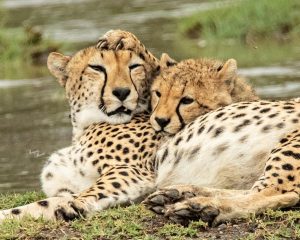


When travelers dream of a Tanzanian safari, the Serengeti and Ngorongoro Crater are often the first locations that come to mind. They have name recognition and a well-deserved reputation for delivering breathtaking views and incredible wildlife sightings. But those of us who guide here know of an underrated jewel: Tarangire National Park. For those willing to venture off the main circuit, it offers diverse landscapes rich in character, extraordinary wildlife, and a rhythm that feels uniquely its own.
A Park with a Story
Tarangire became a national park in 1970, carved from land once grazed by Maasai cattle. Its name comes from the Tarangire River, the park’s lifeline that winds through woodlands, acacia scrub, and open plains. At 2,850 square kilometers (1,100 square miles), it’s smaller than the Serengeti but larger than Yosemite National Park in the U.S. And unlike the Serengeti and Ngorongoro Crater, it often feels quieter—less crowded, more intimate, more in tune with its wild soul. Here, the rhythm of the wild feels unhurried, especially if you venture deeper inside, far from the bustle near the gate where casual tourists linger.
The Land of Giants
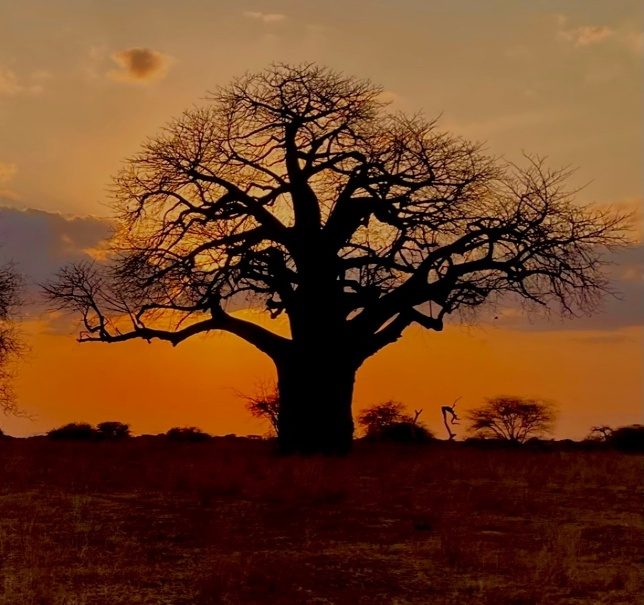
If one image defines Tarangire, it’s the silhouette of the baobab tree against the sky. These “upside-down trees” look like something out of legend—and in fact, they are. Baobabs are prehistoric, dating back more than 200 million years, before the continents split. They are among the oldest living things in Africa, some over a thousand years old, with trunks so wide it would take more than a dozen people holding hands to encircle them.
Their role in culture and imagination is just as vast: Rafiki’s tree in The Lion King, the Tree of Souls in Avatar, the whimsical tree in The Little Prince. In Tarangire, they’re simply a fact of life—ancient giants rising from the savanna, symbols of survival.
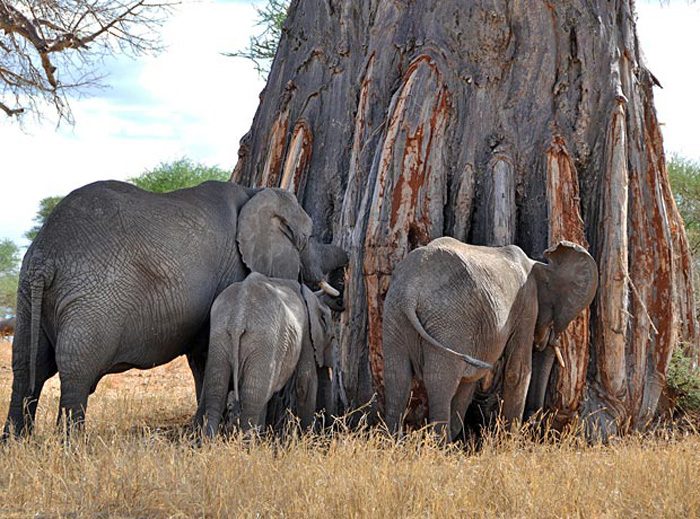
Baobabs have earned their nickname, the “Tree of Life,” by thriving where little else can. They are succulents, storing up to 140,000 liters of water in their swollen trunks during the rains to endure the long dry season. Their bark is spongy, like watermelon, and their fruit is one of the most nutrient-dense foods on Earth.
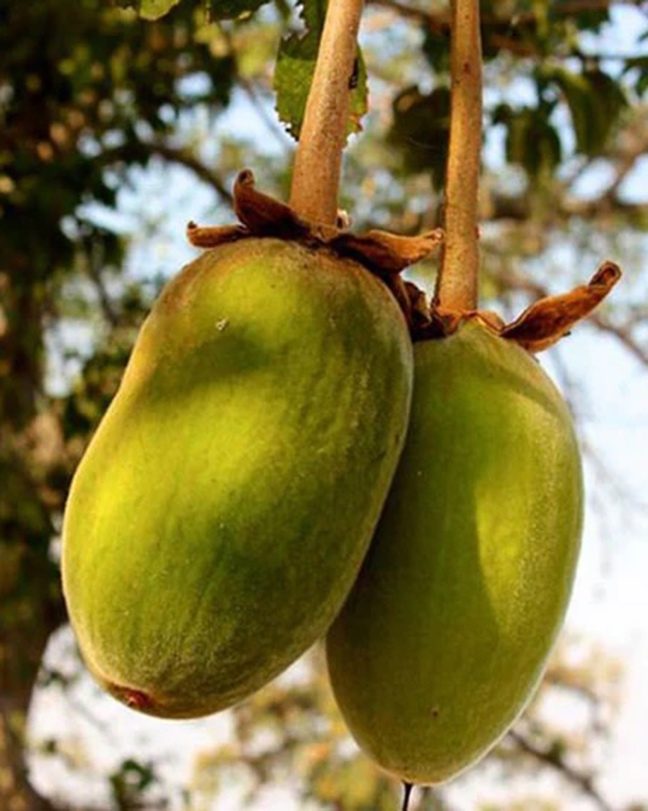
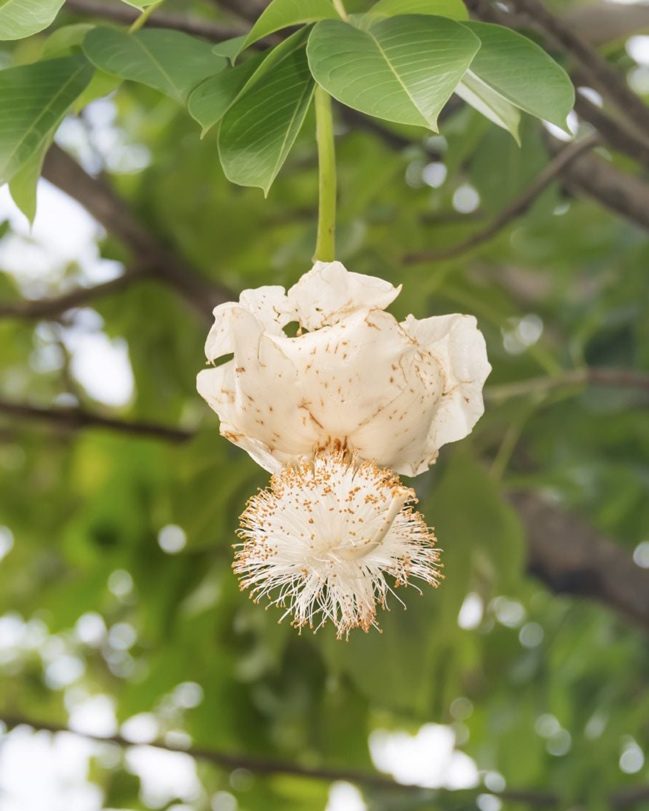
While many people know of the baobab tree, few know it bears fruit—and even fewer know that this fruit is one of the most nutrient-packed foods in the world. Baobab fruit can be eaten fresh or dried. With six times more vitamin C than oranges and more potassium than bananas, it has been used for centuries for food, medicine, and even beauty treatments.
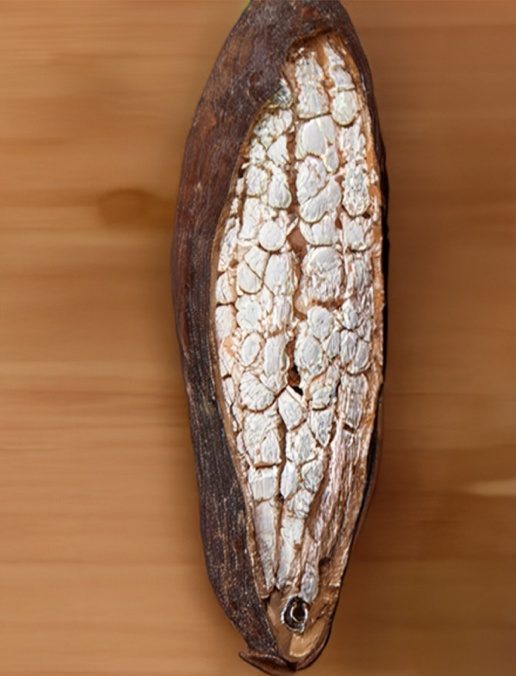
Baobab is also the only fruit in the world that dries naturally on its branch. Instead of dropping and spoiling, it clings to the tree and bakes in the sun for six months, transforming its velvety green coating into a hard coconut-like shell. The pulp inside dries completely. This means the fruit simply needs to be harvested, deseeded, and sieved to produce a pure fruit powder that stays fresh for up to two years—no preservatives required.
Every part of the tree is valuable: the leaves are edible, the seeds can be pressed for oil, and the fibrous bark can be woven into rope.
Baobabs are also ecological anchors. Their hollows shelter owls, bats, lovebirds, and hornbills. Their branches host weaver nests. Their roots stabilize soil and hold moisture. And their fruit feeds everything from baboons to antelope to elephants.
Elephants and Baobabs
In Tarangire, elephants and baobabs share an ancient, complicated relationship. Elephants strip the bark, soft enough for them to puncture and peel away. Beneath lies the inner flesh of the tree
—a spongy, water-rich tissue, much like watermelon. Strips peel off like string cheese, quenching an elephant’s thirst.
Baobabs can withstand extensive damage, with a unique ability to heal and carry on even when misshapen. But where elephant numbers are very high, excessive debarking can eventually lead to the tree’s dehydration and collapse.
Living with elephants is hard for baobabs. Living without them might be impossible. While bees and bush babies help pollinate the trees, elephants play a key role in propagation. They swallow the fruit whole, carry seeds miles across the savanna, and deposit them—softened by digestion—in perfect little packets of fertilizer.
A Patchwork of Habitats
What makes Tarangire so rich in wildlife is its diversity of landscapes. The river valley draws in animals from across the region, especially in the dry months. But step beyond, and you’ll find seasonal swamps shimmering in the sun, rolling acacia woodlands dotted with giraffes, and grassy floodplains where antelope graze.
Each environment holds its own surprises:
- In the swamps, reedbuck and waterbuck linger in the shallows
- On the plains, zebras and wildebeest gather in great herds, shadowed by lions on the hunt.
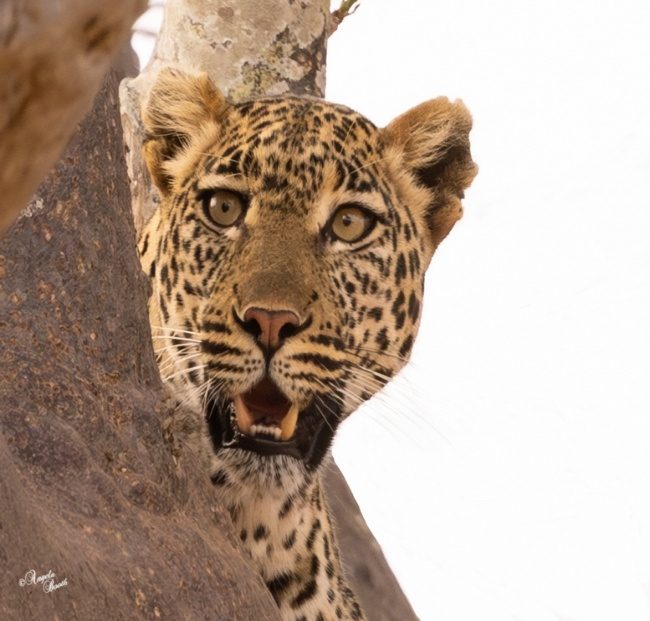
- In the woodlands, leopards drape themselves across branches, patient eyes tracking every hoofbeat always searching for an opportunity.
A Birder’s Paradise
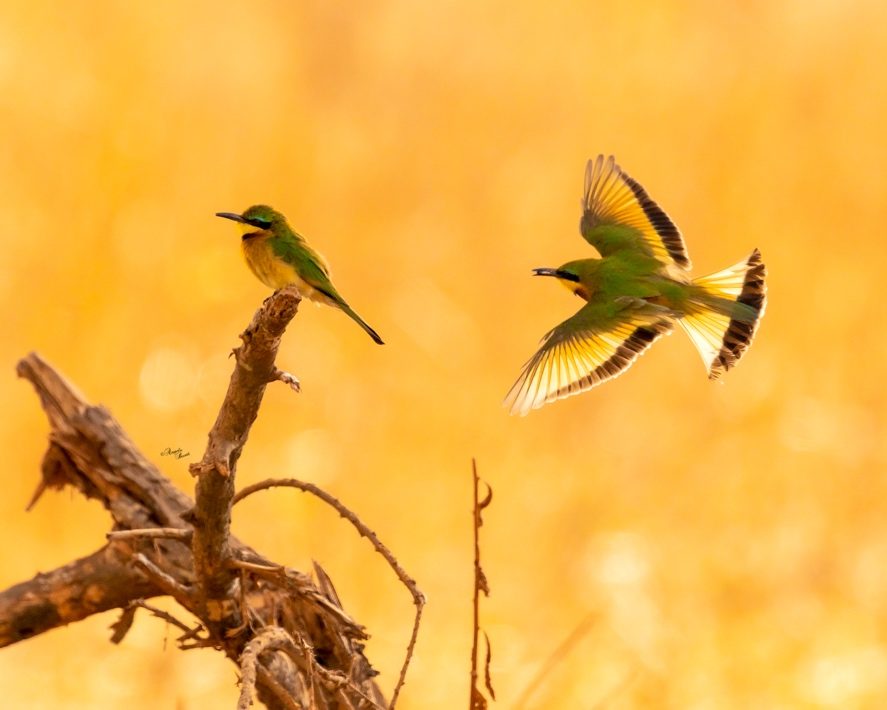
Tarangire is one of Africa’s great birding destinations, with more than 500 recorded species. From the enormous Kori bustard—the heaviest flying bird—to flocks of colorful lovebirds and the spectacular, yellow-collared widowbird, the park is alive with wings and song. In the wet season, migratory species arrive in dazzling numbers, turning Tarangire into a sanctuary of feathers and calls.
Seasons of Tarangire
Like all northern Tanzania, Tarangire’s magic shifts with the seasons, revealing different faces of the same wild, ancient land.
Dry Season (June–October): Life at the River
As the landscape dries, the Tarangire River becomes the lifeblood of the ecosystem. Wildlife funnels toward its banks in astonishing concentrations—elephants, buffalo, wildebeest, zebra, giraffe, and antelope crowd the river corridors. Predators follow the abundance, and elephant herds—sometimes 200 or 300 strong—become part of the daily rhythm.
Green Season (November–May): A Lush, Renewed Paradise
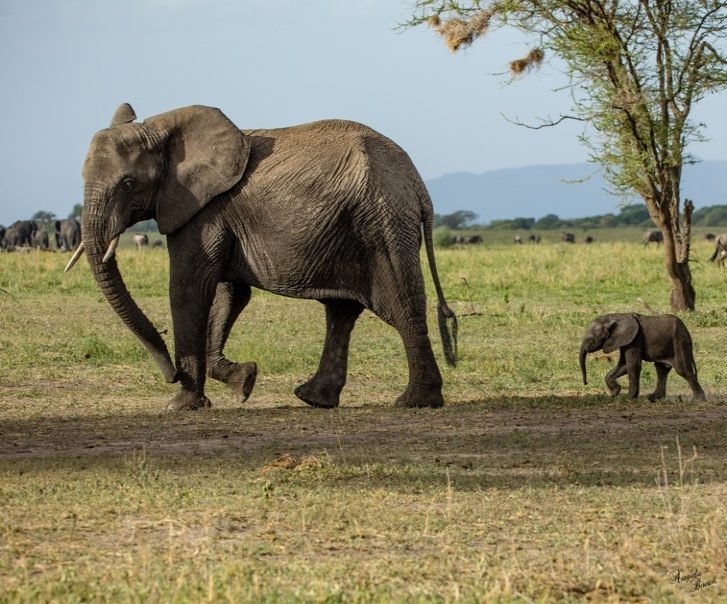
Once the rains return, the transformation is immediate. Tarangire becomes an emerald sanctuary. Migratory birds fill the skies, newborn animals wobble after their mothers, and dramatic clouds cast shifting light across the savanna.
Both seasons hold their own kind of beauty. For those who return, visiting Tarangire in different months feels like discovering two entirely different parks.
The Kingdom of Elephants
Tarangire is, without question, the kingdom of elephants.
Families rest in the shade of ancient baobabs. Young calves experiment—hilariously—with their unruly trunks. Matriarchs guide with steady, gentle authority. And during the dry season, the spectacle deepens: thousands of elephants move toward the river, their low rumbles vibrating through the air, the ground trembling softly beneath their weight.
Elephants don’t just survive here—they shape life for everything around them.
They dig for hidden springs in dry riverbeds, creating small oases that soon draw zebra, antelope, buffalo, and even cautious predators. They carve pathways through thick vegetation, opening corridors for smaller animals. Their daily actions sculpt Tarangire’s ecosystem in ways that ripple outward through the whole park. They are the guardians and the architects of this land.
Why Tarangire Belongs on Your Safari
Tarangire offers not only wildlife, but soul-soothing solitude.
You may sit quietly with a herd of elephants for an hour without another vehicle in sight. You may watch the sunset silhouette a towering baobab—the sky glowing orange, purple, and gold—and feel as though the world has paused just for you.
This is a place that invites you to linger, to listen, and to connect more deeply with Africa’s rhythms.
For us as guides, Tarangire is never “just” a stop. It is a sanctuary—a place of quiet majesty that continually surprises, and one we love to share with travelers who want to experience Africa beyond the ordinary.
Plan Your Journey With Us
At Serengeti Big Sky Safaris, every journey is crafted with intention, heart, and deep knowledge of the land. We guide you through Tanzania not as a destination, but as a story unfolding—written by ancient landscapes, seasonal rhythms, and the wildlife that moves across them.
Serengeti Big Sky Safaris
A Wildlife Adventure Like No Other
Contact us today to start planning your custom safari:
info@serengetibigsky.com (Arusha, Tanzania)
angela@serengetibigsky.com (Michigan, USA)